Skip to content

Gunite Pools in Middle Tennessee

A steel-reinforced concrete shell formed on site, with layout, depth, finish, and feature choices shaped by the property and documented engineering requirements.

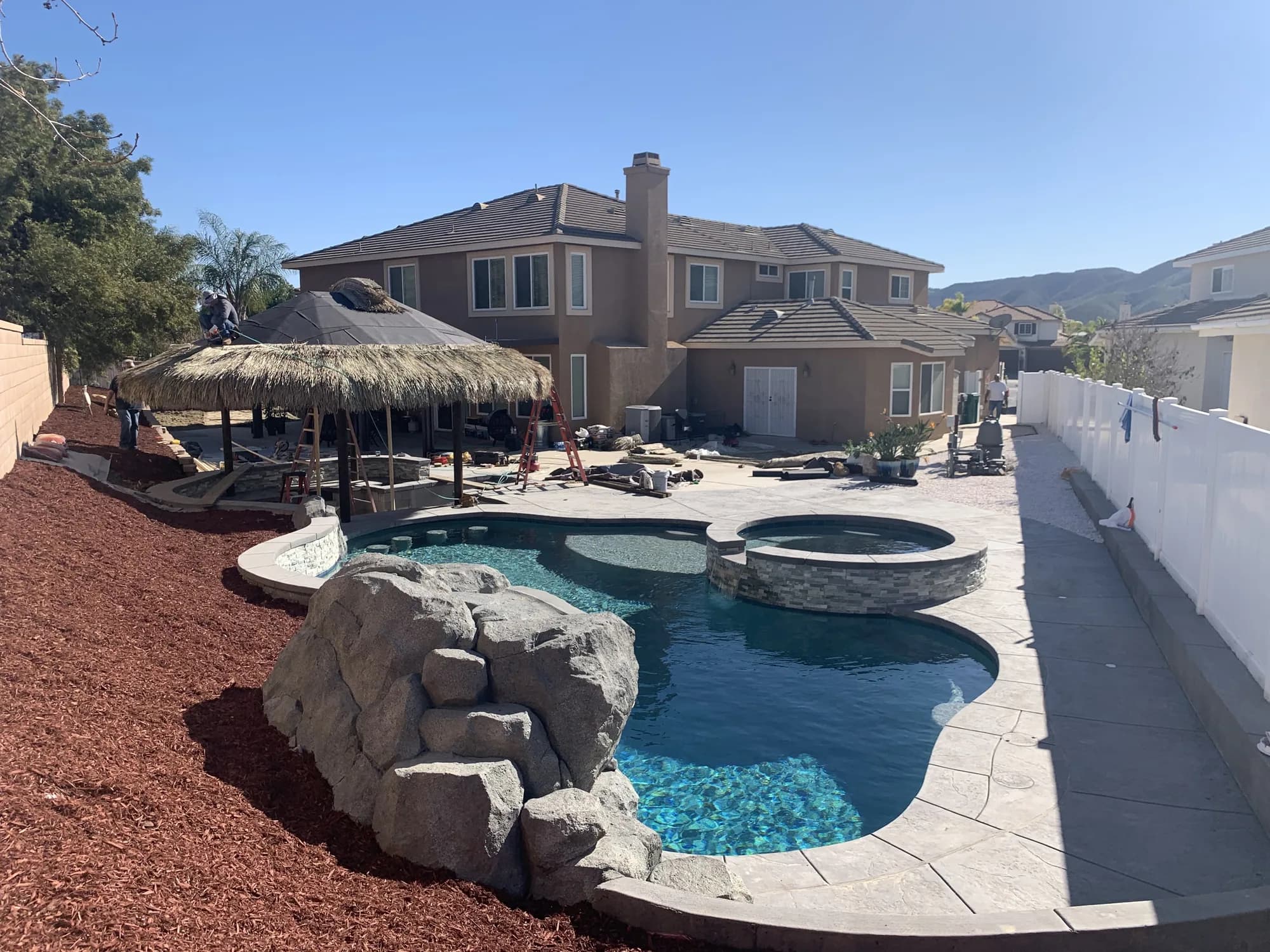
Freeform pool with a round spa, rock waterfall, and shaded poolside pavilion
Project photography. Pool construction type is not identified from appearance alone.

Concrete, shaped to your yard

Construction concept · not to scale

Formed reinforced shellConceptual section of a reinforced shell formed and finished on site.
Formed reinforced shellFormed on site. Illustrative only, not to scale.

Formed on site for broad layout and finish flexibility, with a staged concrete build and a renewable interior surface.

A gunite pool is built on site. The typical sequence shapes the excavation, ties a framework of reinforcing steel, then sprays a concrete mix called gunite over that steel to form the shell. After curing and the remaining site work, the pool receives tile and a plaster or aggregate interior surface.

The layout is not limited to a transported factory shell. Shape, depth, edges, finishes, and integrated features can be planned carefully around the property, subject to access, soil, setbacks, budget, engineering, and code requirements. This page explains those choices and the construction stages behind them.

Why on-site concrete expands the design range

Because the shell is formed in the yard instead of molded in a factory, the outline can respond to the available space. Possibilities include freeform curves, geometric lines, lap-oriented layouts, tanning ledges or sun shelves, benches, beach entries, and varied depths when the site, engineering, and safety requirements support them.

Features can be planned as part of the structure, including attached or spillover spas, vanishing edges, bubblers, waterfalls, scuppers, and raised feature walls. These choices affect hydraulics, structure, access, controls, energy use, and maintenance as well as appearance. The absence of a transported mold creates flexibility, but the property and technical plan still set real limits.
Finishes, and how a gunite pool ages

The interior finish is the surface you see and feel. Options include plaster, pebble or other aggregate mixes, and quartz blends, with glass tile or natural-stone tile at the waterline, steps, or feature walls. Texture, water appearance, care instructions, and service expectations vary by the exact product, so samples and manufacturer documents matter.

The interior surface is a maintenance layer that may need repair or renewal over the pool's life. Timing is not universal; water chemistry, use, environment, workmanship, and the selected finish all matter. Concrete is rigid, so the structural design, drainage, soil conditions, plumbing protection, and cold-weather care need to reflect the Middle Tennessee property.

The case for gunite

Broad layout flexibility

Freeform curves, geometric lines, ledges, steps, and view-oriented edges can be explored because the shell is formed on site. Access, setbacks, structure, hydraulics, safety, and budget determine what belongs in the final plan.

Water features that belong

Raised spas that spill into the pool, bubblers on a sun shelf, sheet waterfalls off a raised wall, scuppers set into stone. These are shaped into the same structure, not bolted on later.

Depth and size on your terms

Depth zones, benches, steps, and shallow areas can be planned around intended use. Property limits, engineering, applicable safety standards, and the surrounding deck all shape the final dimensions.

A finish you choose

Smooth white plaster, a textured pebble aggregate, or a quartz blend, with glass or stone tile at the waterline and steps. The finish sets the color of the water and the feel underfoot.

A renewable interior finish

The interior surface is distinct from the concrete shell and can be repaired or renewed when conditions call for it. Ask what care the selected finish requires and how future surface work is evaluated.

Engineered in place

Steel-reinforced concrete creates a rigid shell. Its design should respond to the soil, elevations, drainage, loads, plumbing layout, and the project's engineering and inspection requirements.

Start with the site and the intended use

Gunite supports site-shaped design because the shell is formed in place. A view-oriented edge, shallow shelf, attached spa, raised wall, benches, and varied depth zones can be studied together when the property and engineering support them.

That flexibility comes with more on-site stages and finish decisions than placing a factory-molded shell. A fiberglass pool uses a selected mold and a vinyl liner pool uses a panel-and-liner structure. Both are worth a look on their own pages, and you can compare all three side by side before deciding.

We do not publish hard prices because the outline, depth, finish, features, access, excavation, drainage, utilities, decking, barriers, and site restoration all affect scope. A site review and written proposal are more useful than a generic range.

How we build a gunite pool

Design and layout

The planning stage reviews the yard, intended shape, depth, features, finish, access, and permitting path before the approved layout is marked for excavation.

Excavation

The crew digs the shape you approved, including the deep end, benches, and any raised walls, and grades the site so the shell sits exactly where it should.

Steel and plumbing

We tie a grid of reinforcing steel through the whole shell and rough in the plumbing for returns, skimmers, drains, and any water features while the structure is still open.

The gunite shell

A concrete mix is sprayed over the steel under high pressure and hand-carved to the final shape. This becomes the solid, monolithic shell, which then cures over the following days.

Tile, coping, and decking

We set the waterline tile and the coping around the edge, then build the decking and any surrounding stone or hardscape that frames the pool.

Plaster and startup

The interior finish goes on last, the pool is filled, and we balance the water and start the equipment. Then we walk you through caring for your new pool.

Tri-Star State Pools project photos

Close view of water spilling over a stacked-rock waterfall into a pool
Freeform pool with a round spa and a rock waterfall under a clear blue sky
Poolside pavilion and spa illuminated at dusk beside a broad concrete patio

Tri-Star State Pools project photos are shown as general design references. Their placement on this page does not identify a construction type.

Questions, answered straight

How long does a gunite pool take to build?

The shell and finishes are built in stages on site, and several stages depend on curing, inspections, weather, trade scheduling, and prior work. Access, excavation, drainage, utilities, decking, features, and restoration also affect completion. Ask for a project schedule that states its assumptions and what can move it.

How flexible are the shape and depth?

Concrete is formed on site rather than selected from a fixed shell mold, which broadens the design range. The final shape and depth still depend on property dimensions, access, setbacks, soil, structure, hydraulics, safety requirements, intended use, and budget.

What maintenance does a gunite pool need?

Regular water balancing and equipment care like any pool, plus some attention to the finish. A plaster surface is brushed and, over the years, refreshed periodically. Pebble and quartz finishes are more textured and longer-wearing. We explain the routine for the finish you choose so there are no surprises.

How does a concrete pool hold up to a Tennessee winter?

The structural plan, drainage, plumbing protection, equipment care, and water-management approach should account for the property and local freeze-and-thaw conditions. The handover should state the seasonal steps and who is responsible for them.

How is gunite different from fiberglass or a vinyl liner?

Gunite is a concrete shell built on site, which allows a broad design range and requires a renewable interior finish. A fiberglass pool uses a factory-molded shell, and a vinyl liner pool uses wall panels with a replaceable liner. The right comparison includes the site, desired layout, construction sequence, maintenance plan, and written scope.

TN RCL #77609 held by Tennessee Home BuildersSteel-reinforced shell, engineered in placeA Tennessee Home Builders company

The contractor credential above is held by Tennessee Home Builders and is not presented as a Tri-Star State Pools license. The contracting and permitting parties belong in the written proposal.

Ready to design your gunite pool?

Tell us about your yard and how you want to use it, and we will map the next step. No pressure, no obligation.